


NutraBlog
How to beat the back-to-school energy slump naturally

September has a habit of going from zero to one hundred. After the slower pace and longer days of summer, suddenly there are alarms to set, lunches to make, school runs to navigate, inboxes to tackle and routines to remember. It’s no wonder the return to school and work can leave energy levels struggling to keep up. The good news is that getting your energy back doesn’t have to mean relying on endless coffee or sugary pick-me-ups. From resetting your sleep schedule and eating for steadier energy to choosing herbal teas such as Yerba Mate, moringa, ginseng and ashwagandha, small changes can make busy September days feel much more manageable.
Why does getting back into routine feel so exhausting?
You survived the summer holidays. Then September arrived.
Suddenly the alarm is going off earlier. Everyone needs to be somewhere at the same time. Breakfast can’t happen whenever you fancy it, and “What’s for packed lunch?” has somehow become a question requiring an answer every single day.
Even if you don’t have children heading back to school, September often brings a noticeable shift. Work picks up after summer holidays, diaries fill again and the relaxed routines of July and August disappear.
Your body notices that change too.
Our sleep and alertness are influenced by our circadian rhythm, the internal clock that helps regulate when we feel awake and when we feel sleepy. Later summer evenings, holidays and changes to normal sleep patterns can disrupt established routines.
When September suddenly demands earlier mornings again, it can take time for your body clock to catch up.
Add busy schedules, less downtime and the mental load of remembering everything, and that familiar back-to-school energy slump starts to make a lot more sense.

Start by getting your sleep routine back
If summer has meant later nights and slower mornings, going straight back to a 6.30am alarm can feel brutal.
Rather than simply accepting exhaustion for the first few weeks, start rebuilding consistency around sleep.
Going to bed and waking at roughly the same time each day helps reinforce the body’s sleep-wake rhythm. Getting natural daylight in the morning can also help signal to your body that it’s time to be awake.
And while another afternoon coffee may seem like the obvious solution after a bad night’s sleep, caffeine can remain in your system for hours. Drinking it later in the day can make it harder to fall asleep that evening, potentially creating a cycle of poor sleep followed by more caffeine.
Sometimes the best way to have more energy tomorrow isn’t another stimulant today. It’s an earlier night.
Don’t let busy mornings mean skipping breakfast
The school run has an impressive ability to make ten minutes disappear.
When you’re searching for a missing shoe, signing a form that definitely wasn’t mentioned last night and trying to leave the house on time, breakfast can quickly become an afterthought.
But what you eat throughout the day can influence how energetic you feel.
A breakfast containing a combination of protein, fibre, carbohydrates and healthy fats is likely to be more satisfying than relying solely on something sugary for a quick burst of energy.
The same principle applies to lunch. Regular, balanced meals can help provide your body with the nutrients and energy it needs throughout a busy day.
You don’t need an elaborate September meal plan. Overnight oats, yoghurt and fruit, eggs on toast or simply preparing breakfast the night before can make busy mornings considerably easier.
Remember that tiredness can sometimes be thirst
When you’re rushing between school, work, appointments and everything else, drinking enough can easily slip down the priority list.
Even mild dehydration can contribute to symptoms such as tiredness, headaches and difficulty concentrating.
Keeping water nearby is one of the simplest solutions, but it doesn’t have to be your only source of fluid. Herbal teas can also contribute to daily hydration.
This is where having a few different options can be useful. A naturally caffeinated tea may suit the morning, while a caffeine-free herbal infusion can provide a warm afternoon drink without adding more caffeine late in the day.
Rethink your first drink of the day
For many people, September mornings begin with coffee.
There’s nothing wrong with that. But if one coffee becomes another at 10am, another after lunch and another to survive the afternoon, it might be worth widening the options.
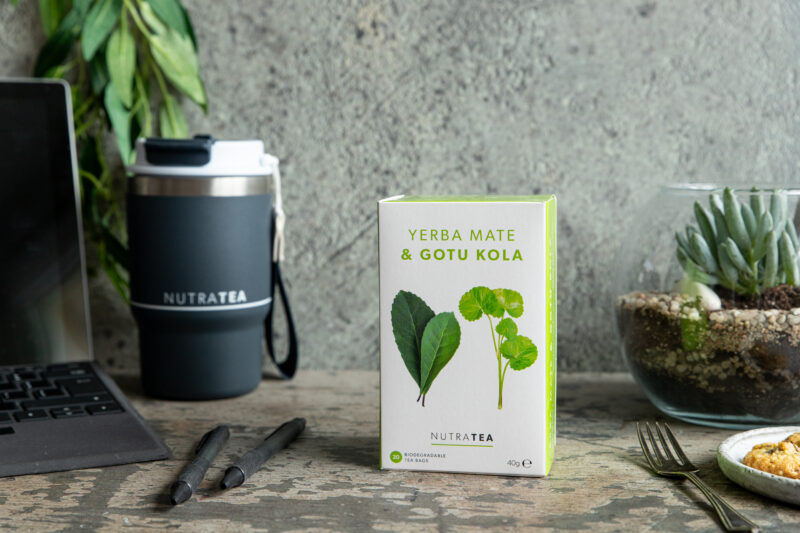
Yerba Mate (Ilex paraguariensis) is unusual among herbal teas because it naturally contains caffeine. Enjoyed across South America for centuries, it has traditionally been associated with energy and alertness and is now increasingly popular as an alternative to coffee.
NutraTea’s Yerba Mate & Gotu Kola Tea pairs it with Gotu Kola (Centella asiatica), a botanical with a long history in Ayurvedic and traditional Chinese practices, where it has traditionally been associated with mental clarity and general wellbeing.
That makes it an interesting option for mornings when your brain needs to get from summer mode to “Where did I put that PE kit?” mode.
Because Yerba Mate contains caffeine, it’s generally better suited to earlier in the day if caffeine tends to affect your sleep.
What should you reach for when 3pm arrives?
There’s a reason the afternoon slump feels so familiar.
Our natural circadian rhythm can produce a dip in alertness during the afternoon, and inadequate sleep, dehydration, sitting for long periods or going too long without food can make that dip more noticeable.
Before automatically reaching for another coffee, ask what you actually need.
Hungry? A balanced snack may help.
Thirsty? Have some water or herbal tea.
Been at your desk for hours? Stand up and take a short walk.
Running on five hours’ sleep? No drink is going to replace the rest your body needs.
If what you really want is the ritual of making something warm, this can also be a good time to switch to a caffeine-free herbal tea.
Moringa and ashwagandha for busy days
Not every tea associated with energy needs to contain caffeine.
Moringa (Moringa oleifera) is a good example. Also known as the drumstick tree, miracle tree, horseradish tree and ben oil tree, moringa has been used as both a food and traditional botanical for generations.
Its leaves contain a range of naturally occurring nutrients and plant compounds, which have helped turn this traditional ingredient into a modern wellness favourite.
Moringa itself doesn’t contain caffeine, so it won’t produce the immediate stimulant effect of coffee.
NutraTea’s Moringa Leaf & Ashwagandha Tea pairs it with ashwagandha (Withania somnifera), an adaptogenic botanical used for centuries within Ayurvedic traditions and traditionally associated with resilience during periods of physical and emotional stress.
That’s particularly relevant during September. Sometimes the challenge isn’t that we need to feel more “switched on”; it’s that we’re trying to maintain our energy while adapting to a suddenly much busier routine.
Try ginseng and ginger when you want something invigorating without caffeine
Another caffeine-free option is Ginseng & Ginger Tea.
Ginseng has been valued in East Asian herbal traditions for thousands of years and has traditionally been associated with vitality, stamina and resilience. It contains naturally occurring compounds called ginsenosides, which continue to attract scientific interest.
Ginger brings a different character to the cup. Its distinctive warming flavour can make an infusion feel naturally invigorating even though ginger itself doesn’t contain caffeine.
That difference matters.
A herbal ingredient can be traditionally associated with energy or vitality without being a stimulant. If you’re trying to reduce the number of caffeinated drinks you consume during a busy day, understanding which is which makes choosing a tea much easier.
Make your afternoon break an actual break
Sometimes the problem isn’t what’s in your mug. It’s what you’re doing while drinking it.
Making tea and immediately returning to your laptop while answering emails doesn’t provide much of a mental reset.
Instead, use the few minutes while your tea brews as a cue to step away.
Stretch. Walk outside. Look away from a screen. Take a few slow breaths. Have a conversation with someone that isn’t about tomorrow’s schedule.
Short breaks won’t magically remove a packed September diary, but breaking up long periods of concentration can help a busy day feel more manageable.
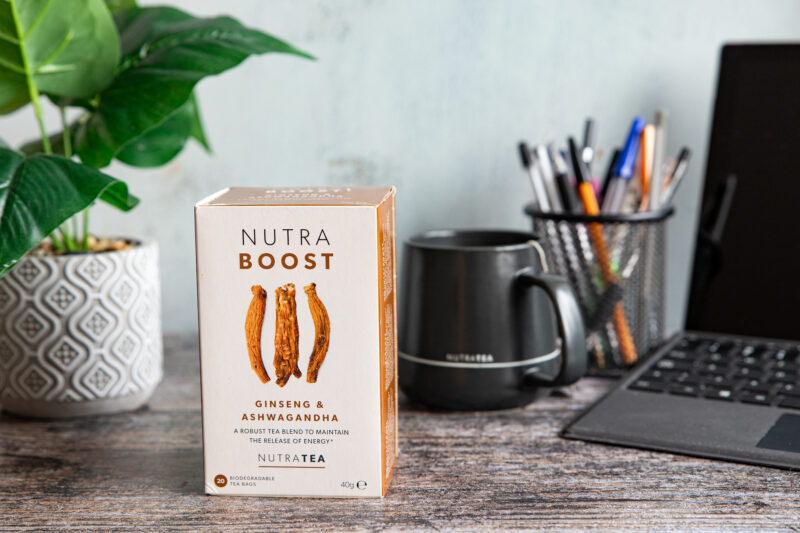
Whether you choose NutraBoost, Ginseng & Ginger or another caffeine-free herbal blend, the ritual itself can become a useful marker between one part of your day and the next.
Make September easier on your future self
The best routines are often the ones that remove decisions.
If every morning begins with working out what everyone needs, what you’re eating and where everything is, you’re using mental energy before you’ve even left the house.
Try making tomorrow slightly easier tonight.
Put bags by the door. Prepare breakfast or lunch where possible. Fill your water bottle. Decide what you’re wearing. Put your tea somewhere you’ll actually see it.
None of these things sounds revolutionary, because they aren’t.
But when mornings are busy, removing five tiny decisions can make a surprisingly big difference.
Don’t expect a tea to fix genuine exhaustion
There’s an important difference between needing a little afternoon refreshment and feeling persistently exhausted.
Herbal teas can be an enjoyable part of a healthy routine. Naturally caffeinated Yerba Mate can temporarily increase alertness, while caffeine-free botanicals can provide alternatives to yet another coffee.
But tea can’t compensate for chronic sleep deprivation, inadequate nutrition or an underlying health problem.
If you’re regularly feeling extremely tired despite getting adequate rest, or your energy levels have changed significantly without an obvious reason, speak to your GP.
Sometimes listening to tiredness is more useful than trying to override it.
Your back-to-school energy reset
September doesn’t need to begin with an overnight transformation into the world’s most organised person.
Start smaller.
Move bedtime back towards where you need it. Eat something before you leave the house. Keep water within reach. Get outside during the day. Take proper breaks. And think about whether every energy dip genuinely requires another coffee.
When you do want something in your cup, choose according to the moment.
Yerba Mate & Gotu Kola provides a naturally caffeinated option for earlier in the day. Moringa Leaf & Ashwagandha brings together two caffeine-free botanicals with very different traditional stories. Ginseng & Ginger offers an invigorating caffeine-free alternative, while NutraBoost provides a multi-botanical option for busy days.
Getting back into routine can be tiring. But rather than trying to power through September on caffeine and good intentions, a few realistic habits can help make the transition feel considerably easier.
And maybe label the PE kit this time.

Frequently Asked Questions
Why do I feel so tired when I go back to work or school?
Changes to sleep schedules, earlier mornings, increased mental demands, stress and busier routines can all contribute. Your circadian rhythm may also need time to adjust after a period of later nights or different sleeping patterns.
What tea is best for morning energy?
Yerba Mate naturally contains caffeine, making it an option for people looking for a caffeinated alternative to coffee. The best choice depends on your individual caffeine tolerance and preferences.
Which energy teas are caffeine free?
Moringa, ashwagandha, ginseng and ginger are naturally caffeine free. Their traditional associations with energy, vitality or resilience shouldn’t be confused with the stimulant effect of caffeine.
What can help with the 3pm energy slump?
Start by considering sleep, hydration, food and movement. Drinking water, having a balanced snack, getting outside or taking a short movement break may be more useful than automatically reaching for caffeine.
Can herbal tea help with hydration?
Yes. Herbal tea contributes towards your daily fluid intake. Caffeine-free varieties can be particularly useful when you want a warm drink later in the day without consuming additional caffeine.
How can I get back into a routine after the summer holidays?
Try gradually returning to consistent sleep and wake times, planning simple meals, preparing for mornings the night before and building regular breaks, movement and hydration into your day. Small, repeatable habits are generally easier to maintain than trying to overhaul everything at once.