


NutraBlog
Herbal teas for energy: Natural ways to stay energised throughout the day

Feeling low on energy doesn’t always mean you need another coffee. Our energy levels are influenced by everything from sleep and hydration to what we eat, how much we move and even when we take breaks. Herbal teas can play a useful role within that bigger picture, whether you choose a naturally caffeinated ingredient such as Yerba Mate or caffeine-free botanicals traditionally associated with vitality and resilience, including ginseng, moringa and ashwagandha. Here, we explore why energy levels rise and fall, which herbal teas people choose for energy and focus, and how to build habits that can help you feel more consistently energised throughout the day.
Why do our energy levels change throughout the day?
Few of us feel equally energetic from the moment we wake up until the moment we go to bed.
Our bodies naturally follow a roughly 24-hour internal clock known as the circadian rhythm. This helps regulate when we feel alert and when we begin to feel sleepy. Alongside this biological rhythm, sleep quality, food, hydration, stress, physical activity and caffeine can all influence how energetic we feel.
That’s why tiredness isn’t always solved by simply adding more caffeine.
If you’ve slept badly, skipped lunch or barely had a glass of water all morning, another coffee may temporarily make you feel more alert without addressing what’s behind the slump.
Understanding the cause of low energy is a much better starting point.

What causes the afternoon energy slump?
That familiar post-lunch dip isn’t necessarily just the result of eating too much at lunchtime.
Our natural circadian rhythm typically produces a dip in alertness during the afternoon. A poor night’s sleep, dehydration, long periods of sitting, stress or going too long without eating can make it feel considerably worse.
What you eat matters too. Meals and snacks dominated by rapidly digested carbohydrates can cause blood glucose to rise quickly before falling again, which may leave some people feeling hungry or lacking in energy.
This explains why reaching for sugar or caffeine can sometimes turn into a cycle. You feel tired, grab something for a quick boost and then find yourself looking for another pick-me-up a few hours later.
A more sustainable approach looks at the whole day rather than one cup of coffee.
Can herbal tea give you energy?
It depends on what’s in your cup.
“Energy tea” can mean two quite different things.
Some herbal infusions, most notably Yerba Mate, naturally contain caffeine and can therefore directly increase alertness in much the same way other caffeinated drinks can.
Others, including moringa, ashwagandha, ginger and ginseng, are naturally caffeine free. These don’t provide the same immediate stimulant effect. Instead, they have histories of traditional use relating to vitality, resilience or general wellbeing.
Understanding that distinction is useful when choosing a herbal tea for energy. If you want caffeine, choose a naturally caffeinated botanical. If you’re trying to reduce your caffeine intake, a caffeine-free blend may fit your routine better.
Yerba Mate: natural caffeine for alertness
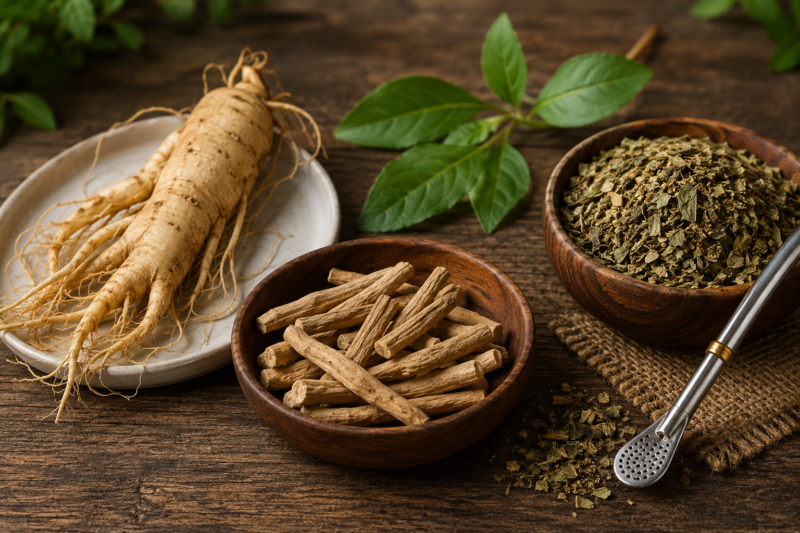
Yerba Mate (Ilex paraguariensis) has been enjoyed in South America for centuries and has more recently found a global audience among people looking for alternatives to coffee.
Unlike most herbal teas, Yerba Mate naturally contains caffeine. Caffeine works by blocking the action of adenosine, a chemical messenger that gradually builds up in the brain while we’re awake and contributes to feelings of tiredness. This is why caffeine can temporarily make us feel more alert.
Yerba Mate also contains naturally occurring plant compounds including polyphenols, and its distinctive earthy flavour provides a very different experience from coffee.
NutraTea’s Yerba Mate & Gotu Kola Tea pairs it with Gotu Kola (Centella asiatica), a botanical with a long history in Ayurvedic and traditional Chinese practices, where it has traditionally been associated with mental clarity and general wellbeing.
For someone looking for a naturally caffeinated tea to enjoy in the morning or earlier afternoon, this combination offers a different route to the usual coffee.
Ginseng and ginger: an energising combination with ancient roots
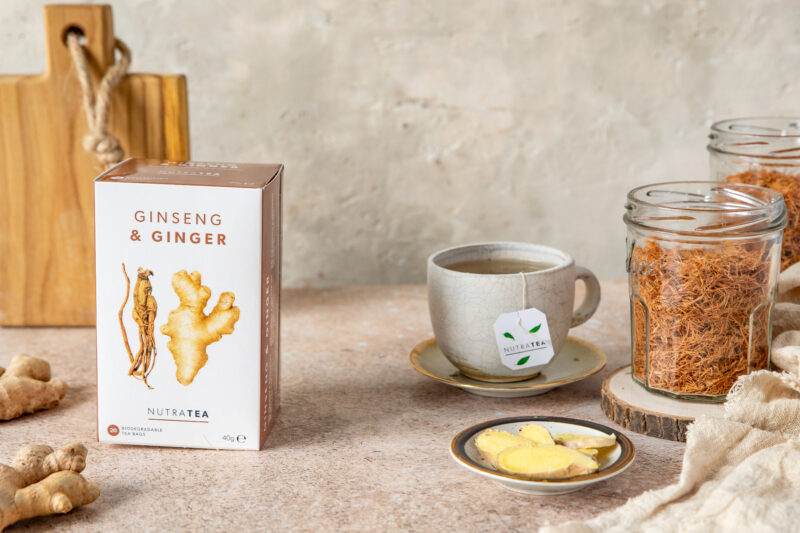
Ginseng has a reputation for vitality that stretches back thousands of years.
The roots of plants belonging to the Panax genus have been particularly valued in East Asian herbal traditions. Ginseng contains naturally occurring compounds known as ginsenosides, which have become an important focus of modern scientific research.
Rather than containing caffeine, ginseng has traditionally been used as a tonic associated with energy, stamina and resilience. That means it shouldn’t be expected to produce the immediate stimulant effect of a strong coffee.
Ginger brings something different to the pairing. Famous for its warming flavour, ginger (Zingiber officinale) has been used both as food and as a traditional botanical for generations, particularly in relation to digestion.
NutraTea’s Ginseng & Ginger Tea brings these two distinctive roots together, making it an option for people who want an invigorating-tasting herbal drink without relying on caffeine.
Moringa: why the miracle tree became a wellness favourite
Moringa has gone from a relatively unfamiliar ingredient in the UK to a familiar name in modern wellness, but its story began long before the current interest.
Moringa oleifera is a tree native to parts of South Asia and is now grown throughout many tropical and subtropical regions. You may also encounter it under names including the drumstick tree, horseradish tree, ben oil tree and, more dramatically, the miracle tree.
The leaves are particularly interesting because the plant contains a range of naturally occurring nutrients and phytochemicals. This has led to extensive interest in moringa as both a food crop and a traditional botanical.
There’s an important distinction when talking about moringa tea for energy, however. Moringa is naturally caffeine free, so it doesn’t create energy in the same way as Yerba Mate or coffee.
Instead, its association with energy comes from its nutritional profile and long-standing use as part of everyday diets and wellness traditions.
NutraTea’s Moringa Leaf & Ashwagandha Tea pairs moringa with another botanical that has become increasingly familiar in modern wellness: ashwagandha.
Ashwagandha: energy isn’t always about stimulation
When you’re exhausted, more stimulation can seem like the obvious answer.
But sometimes low energy goes hand in hand with periods of stress, poor sleep or feeling constantly stretched.
That’s where the story of ashwagandha (Withania somnifera) becomes interesting. Used for centuries in Ayurvedic traditions, ashwagandha is commonly described as an adaptogen, a term used for certain botanicals traditionally associated with helping the body adapt to physical and emotional stress.
Ashwagandha doesn’t contain caffeine and isn’t a stimulant. Its place in an energy-focused routine is therefore very different from Yerba Mate’s.
Pairing it with moringa creates a caffeine-free option for people interested in supporting everyday wellbeing without necessarily looking for an immediate caffeine hit.
What about NutraBoost?
Sometimes a blend brings together several different herbal traditions rather than focusing on one or two headline ingredients.
NutraBoost is designed around this broader approach, combining botanicals selected for their traditional associations with energy and vitality.
This can be useful for people who prefer a multi-herb infusion rather than choosing an individual botanical. It also reflects a principle that’s existed within herbal traditions for centuries: ingredients are often combined because each contributes something different to the finished blend.
When comparing energy teas, checking the ingredients is important. Natural energy doesn’t automatically mean caffeine free, so look at what’s actually inside your tea and choose according to what you want from it.
Herbal tea vs coffee for energy: What’s the difference?
Coffee isn’t inherently bad, and herbal tea isn’t automatically better. They simply offer different options.
Coffee provides caffeine, so its effect on alertness can be relatively quick. Yerba Mate also contains caffeine, although the amount in either drink will vary depending on the product, serving size and preparation.
Caffeine-free herbal teas such as Moringa Leaf & Ashwagandha or Ginseng & Ginger work differently. They’re better understood as drinks containing botanicals traditionally associated with wellbeing and vitality rather than direct substitutes for caffeine’s stimulant effect.
There’s also the ritual to consider. If your afternoon tiredness automatically sends you towards the coffee machine, swapping some of those cups for caffeine-free herbal tea can help reduce your total daily caffeine intake while preserving the break itself.
That’s particularly useful later in the day, because caffeine can remain in the body for hours and consuming it too close to bedtime may interfere with sleep in some people. Poor sleep then makes tomorrow’s energy problem harder to solve.
How to choose a herbal tea for energy
Rather than looking for one “best tea for energy”, think about what you actually need at that point in your day.
If you’re looking for alertness and you’re comfortable consuming caffeine, a naturally caffeinated tea such as Yerba Mate & Gotu Kola may suit the morning or early afternoon.
If you’d prefer something caffeine free, Ginseng & Ginger offers an invigorating blend built around two roots with long histories of traditional use.
Moringa Leaf & Ashwagandha may appeal if you’re interested in nutrient-rich moringa alongside an adaptogenic herb traditionally associated with resilience and stress.
And a multi-botanical blend such as NutraBoost provides another option when you’re looking to incorporate several traditional herbs into one daily infusion.
The important thing is that different teas serve different purposes. “Energy” isn’t a single ingredient you can add to a cup.
Five habits that can help support steadier energy
Tea can complement a healthy routine, but it can’t compensate for consistently poor sleep, inadequate nutrition or dehydration.
A few fundamentals make a much bigger difference.
Start with sleep. Most adults need around seven to nine hours, although individual requirements vary. A consistent sleep and wake time can also support the body’s natural rhythm.
Don’t forget water. Even mild dehydration can leave you feeling tired or struggling to concentrate. Herbal tea can contribute to your overall fluid intake.
Build balanced meals. Combining sources of protein, fibre, carbohydrates and healthy fats can help provide sustained nutrition rather than relying on sugary snacks whenever energy falls.
Move regularly. If you’ve been staring at a screen for hours, a short walk or simply standing and stretching can provide a useful physical and mental reset.
Think about caffeine timing. If you’re consuming caffeinated drinks throughout the afternoon and then struggling to sleep, your solution to today’s tiredness could inadvertently be contributing to tomorrow’s.
Can herbal tea replace sleep when you’re tired?
Unfortunately, no tea can turn four hours of sleep into eight.
Caffeine can temporarily reduce feelings of tiredness, and an enjoyable drink can certainly become part of a productive routine, but neither replaces adequate rest.
Persistent fatigue can also have many causes. If you’re regularly exhausted despite getting enough sleep or you’ve noticed a significant unexplained change in your energy levels, it’s worth speaking to your GP rather than continually trying to push through it with caffeine.
That’s an important part of approaching “natural energy” realistically: sometimes tiredness is simply your body’s way of telling you it needs something other than another drink.
Finding the right kind of energy for your day
Feeling more energised isn’t always about finding the strongest possible pick-me-up.
Sometimes you need alertness. Sometimes you need hydration. Sometimes you’ve been sitting down too long. And sometimes what your body really needs is rest.
Herbal teas give you different options for different moments. Naturally caffeinated Yerba Mate & Gotu Kola can provide an alternative to coffee, while blends such as Ginseng & Ginger, Moringa Leaf & Ashwagandha and NutraBoost offer ways to explore botanicals traditionally associated with energy, vitality and resilience.
The most useful question, then, isn’t simply “Which tea gives me energy?”. It’s “Why am I tired, and what does my body need right now?”
Once you know that, choosing what’s in your cup becomes much easier.
Frequently Asked Questions
What is the best herbal tea for energy?
There isn’t one best tea for everyone. Yerba Mate naturally contains caffeine and may suit people looking for increased alertness, while caffeine-free ingredients such as ginseng, moringa and ashwagandha have different histories of traditional use relating to vitality and wellbeing.
Which herbal teas contain caffeine?
Most herbal teas are naturally caffeine free, but Yerba Mate is an important exception. It naturally contains caffeine, so always check the ingredients if you’re specifically trying to avoid caffeine.
Can herbal tea help with the afternoon slump?
Herbal tea can form part of an afternoon routine by contributing to hydration and providing an alternative to sugary or highly caffeinated drinks. However, persistent afternoon tiredness may also relate to sleep, nutrition, stress, inactivity or your natural circadian rhythm.
Is moringa tea good for energy?
Moringa (Moringa oleifera) doesn’t contain caffeine, so it won’t provide the same stimulant effect as coffee or Yerba Mate. Its association with energy and wellbeing instead relates to its nutritional composition and long history as a food and traditional botanical.
Is ginseng tea caffeinated?
Ginseng itself doesn’t naturally contain caffeine. Its traditional association with energy and vitality is therefore different from the stimulant effect produced by caffeine.
When should I drink an energy tea?
Naturally caffeinated teas are generally better suited to the morning or earlier part of the day, particularly if caffeine affects your sleep. Caffeine-free herbal blends offer more flexibility and can be enjoyed later in the day.