


NutraBlog
What is spearmint tea good for? Benefits explained

Spearmint tea has become one of the most talked-about herbal teas in recent years, particularly among women interested in hormone health and natural wellbeing. Traditionally enjoyed for its refreshing flavour and naturally caffeine-free nature, spearmint has long been used in herbal practices to support digestion and everyday wellness. More recently, growing interest in research exploring its relationship with hormones and conditions such as PCOS (PMOS) has helped bring this familiar herb back into the spotlight. In this guide, we’ll explore what spearmint tea is, its traditional uses, what current research says, how it compares with peppermint, and why NutraTea pairs it with white peony in its carefully crafted herbal blend.
What is spearmint tea?
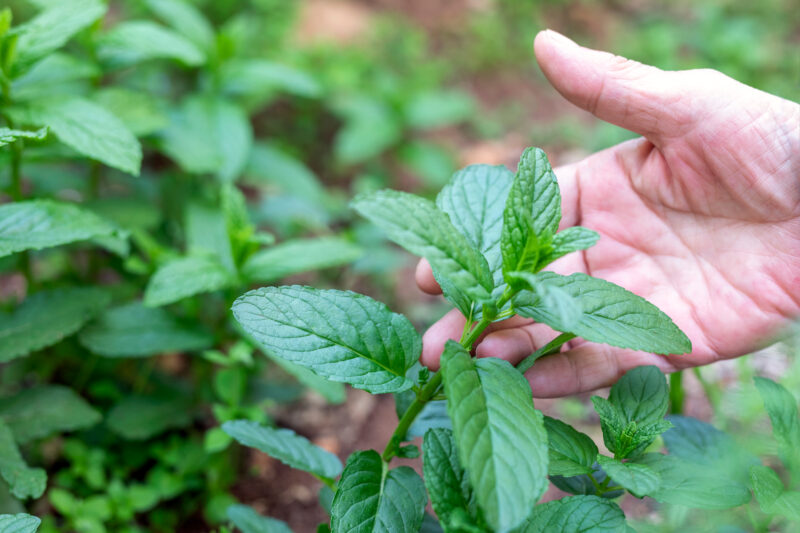
Spearmint tea is a herbal infusion made from the leaves of the spearmint plant (Mentha spicata), a member of the mint family that’s been cultivated for thousands of years.
Unlike black or green tea, spearmint tea is naturally caffeine free, making it a popular choice for people looking to enjoy a warm drink without the stimulating effects of caffeine.
Although many people think all mint teas are the same, spearmint has its own distinctive character. Its flavour is softer and sweeter than peppermint, with a gentle freshness that makes it easy to enjoy throughout the day.
Historically, spearmint has been valued in many cultures not only as a culinary herb but also as part of traditional herbal practices, where it has been used in everything from herbal infusions to aromatic gardens.
Why is everyone suddenly talking about spearmint tea?
For centuries, spearmint was simply known as a refreshing herbal tea.
Today, however, it has become one of the most searched-for herbal drinks online.
Why?
Part of the answer lies in growing conversations around women’s health. As awareness of conditions such as polycystic ovary syndrome (PCOS) has increased, so too has interest in herbs that have traditionally been associated with hormonal wellbeing.
At the same time, more people are looking for naturally caffeine-free alternatives to tea and coffee, while social media has introduced a new generation to herbal teas that had previously been overlooked.
Although online trends often come and go, spearmint’s popularity is built on something much older. Long before it appeared in social media posts, it had already earned a place in herbal traditions around the world.
What is spearmint tea traditionally used for?
Like many herbs, spearmint has a long history of traditional use.
Over the centuries, people have enjoyed spearmint tea for a variety of reasons, including:
- Supporting digestion – Spearmint has traditionally been enjoyed after meals as a refreshing herbal tea.
- Freshening the palate – Its naturally sweet, cooling flavour has made it a popular choice after eating.
- Everyday relaxation – Being naturally caffeine free, spearmint tea is often chosen as a calming alternative to traditional tea and coffee.
- Women’s wellbeing – In several herbal traditions, spearmint has been associated with supporting women’s health, although the ways it has been used have varied between cultures.
These traditional uses are part of spearmint’s long history, but it’s important to remember that traditional herbal practice and modern scientific evidence are not always the same thing.
What does the research say about spearmint tea?
One of the reasons spearmint has attracted so much attention in recent years is because researchers have started exploring some of its traditional uses in more detail.
Several small studies have investigated spearmint’s potential role in hormone health, particularly in women with PCOS. Some findings have suggested that spearmint may influence certain hormone levels, while others have explored whether regular consumption could play a role in supporting hormonal balance.
However, the current evidence is still limited. Many studies involve relatively small numbers of participants, and further high-quality research is needed before firm conclusions can be drawn.

Why is spearmint tea often linked with PCOS?
If you’ve searched for spearmint tea online, you’ve almost certainly come across discussions about PCOS.
Now officially referred to as Polyendocrine metabolic ovarian syndrome (PMOS), Polycystic ovary syndrome (PCOS) is a common hormonal condition that can affect periods, fertility, skin and hair, and metabolism. Because some early studies have explored spearmint’s potential effects on certain hormones, the herb has become a popular topic of conversation within PCOS communities.
It’s important, however, to separate online discussion from established medical advice.
Some women choose to include spearmint tea as part of their wider wellbeing routine, but it shouldn’t replace professional healthcare or prescribed treatments. Anyone with concerns about PCOS should always seek advice from a qualified healthcare professional.
Spearmint tea vs peppermint tea: What’s the difference?
Although they’re closely related, spearmint and peppermint aren’t interchangeable.
Spearmint contains less menthol than peppermint, giving it a sweeter, gentler flavour that’s often described as fresh rather than intensely cooling.
Peppermint, by comparison, has a stronger, more pronounced taste and has traditionally been associated with digestive comfort.
Both herbs are naturally caffeine free and have long histories in herbal traditions, but many people simply choose between them based on flavour and personal preference.
For those looking for a lighter, sweeter mint tea, spearmint is often the preferred choice.
Can you drink spearmint tea every day?
For most people, spearmint tea can be enjoyed as part of a balanced diet and healthy lifestyle.
Because it’s naturally caffeine free, many people choose to drink it daily as an alternative to black tea, green tea or coffee. As with any herbal tea, however, moderation is sensible. If you’re pregnant, breastfeeding, taking medication or managing a medical condition, it’s always advisable to speak with your healthcare professional before introducing herbal products into your routine.
Why is spearmint paired with white peony?
Traditional herbalists have rarely relied on a single herb in isolation.
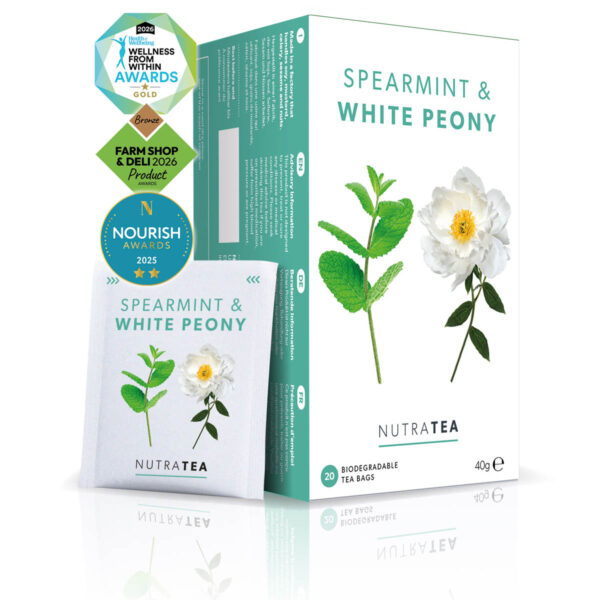
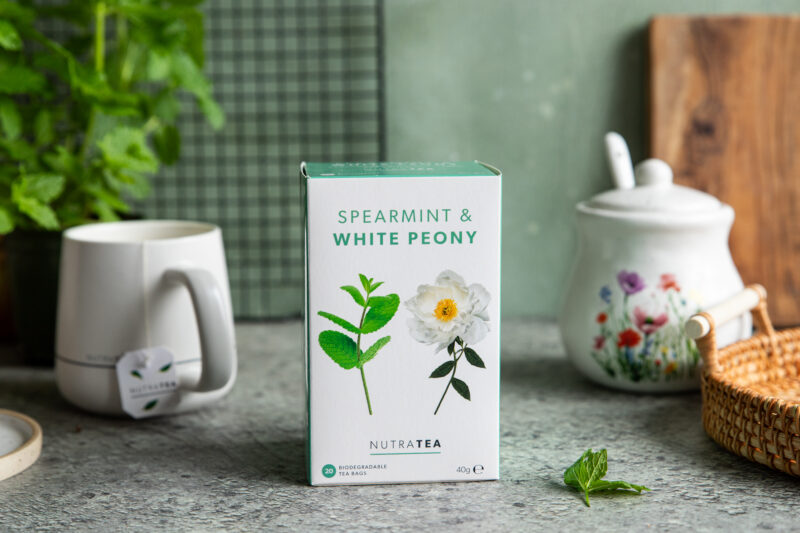
Instead, botanicals have often been combined to create balanced blends, with different ingredients complementing one another. That’s the thinking behind NutraTea’s Spearmint & White Peony Tea.
The blend brings together the fresh, naturally caffeine-free character of spearmint with white peony, a flowering plant that has been valued in traditional herbal practices for centuries. While spearmint provides a light, refreshing flavour, white peony has a delicate floral character that creates a well-rounded and enjoyable herbal tea.
Together, they create a blend that’s both refreshing and thoughtfully balanced, reflecting the long tradition of pairing complementary botanicals rather than relying on a single ingredient.
Did you know?
- Spearmint belongs to the same plant family as basil, rosemary and sage.
- Ancient Greeks and Romans used spearmint as both a culinary herb and an aromatic plant.
- Spearmint contains much less menthol than peppermint, giving it a naturally sweeter taste.
- It’s the lower menthol content that makes spearmint noticeably milder than peppermint tea.
Why spearmint tea continues to grow in popularity
Few herbal teas have experienced quite the same resurgence as spearmint.
While its refreshing flavour has been appreciated for centuries, today’s interest is also being driven by growing conversations around hormone health, naturally caffeine-free living and traditional botanical wellness.
Whether you’re simply looking for a refreshing herbal tea or are curious about why spearmint has become such a popular topic of discussion, its long history and growing body of research make it one of the most fascinating herbs to explore.
NutraTea’s Spearmint & White Peony Tea builds on this heritage by combining two carefully selected botanicals in a blend inspired by traditional herbal wisdom and designed to fit naturally into modern wellbeing routines.
Frequently Asked Questions
What is spearmint tea good for?
Traditionally, spearmint tea has been enjoyed for supporting digestion, freshening the palate and as a naturally caffeine-free herbal drink. More recently, it has attracted attention because of growing research into hormone health.
Is spearmint tea naturally caffeine free?
Yes. Spearmint tea contains no caffeine, making it a popular alternative to black tea, green tea and coffee.
What’s the difference between spearmint and peppermint tea?
Spearmint has a sweeter, gentler flavour and contains less menthol than peppermint, while peppermint has a stronger, cooler taste.
Can you drink spearmint tea every day?
Many people enjoy spearmint tea daily as part of a balanced diet. If you’re pregnant, breastfeeding, taking medication or have any medical concerns, it’s always best to seek advice from your healthcare professional.
Why is spearmint tea linked with PCOS?
Some early research has explored spearmint’s potential relationship with hormone health, which has led to growing interest among women with PCOS. However, more research is needed, and spearmint tea should not be considered a treatment for PCOS (PMOS).
What is white peony?
White peony (Paeonia lactiflora) is a flowering plant that has been used in traditional herbal practices for centuries. In NutraTea’s Spearmint & White Peony blend, it complements spearmint with a delicate floral character, creating a balanced herbal infusion.