


NutraBlog
What is raspberry leaf tea, and what is it used for?
Raspberry leaf tea is a naturally caffeine-free herbal infusion made from the leaves of the red raspberry plant (Rubus idaeus). While it’s perhaps best known for its traditional association with pregnancy and women’s wellbeing, raspberry leaf has a much broader history of use. Its leaves contain naturally occurring plant compounds including tannins and flavonoids, and they have been brewed into herbal preparations for generations. So, what is raspberry leaf tea actually used for, and what do we know about its potential benefits today? From traditional women’s health practices to digestive wellbeing and everyday caffeine-free drinking, we take a closer look at the story behind this increasingly popular herb.
What is raspberry leaf tea?
You probably know what a raspberry tastes like. But have you ever thought about the leaves growing around the fruit?
Raspberry leaf tea is made using the dried leaves of the red raspberry plant, Rubus idaeus. The plant is native to parts of Europe and Asia but is now cultivated widely around the world.
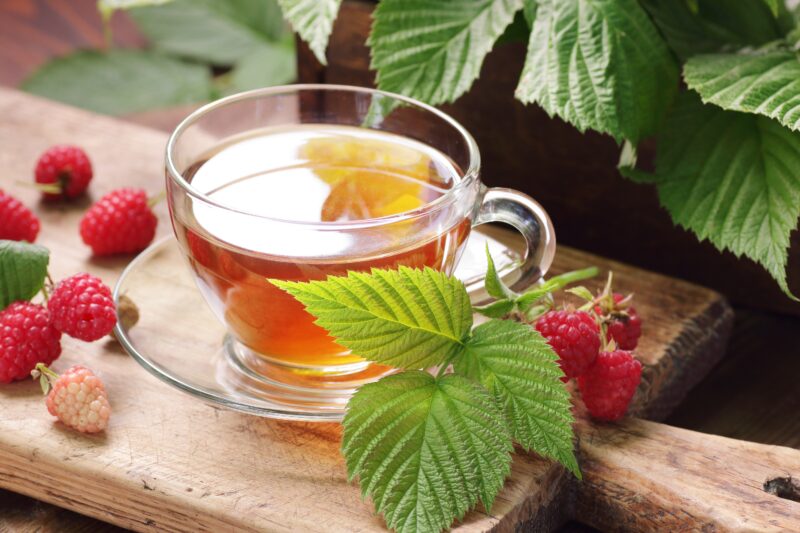
Once harvested and dried, the leaves can be steeped in hot water to create a herbal infusion. Despite its name, don’t expect it to taste like a bowl of raspberries. Raspberry leaf tea isn’t particularly fruity or sweet. Instead, it has a mild, earthy flavour that can be surprisingly similar to traditional black tea.
Unlike black tea, however, raspberry leaf is naturally caffeine free.
It’s an important distinction because raspberry leaf tea and raspberry-flavoured fruit tea are two very different drinks. A raspberry fruit infusion typically contains dried fruit, flavourings or other botanicals. Raspberry leaf herbal tea specifically uses the leaves of the plant, which have their own composition and centuries-long history in herbal traditions.
What is raspberry leaf tea used for?
Raspberry leaf is particularly well known for its traditional use in women’s health, including during the later stages of pregnancy. But that isn’t its only use.
Over generations, raspberry leaves have been brewed and prepared in traditional herbal practices for a range of purposes. Today, people may choose raspberry leaf tea because:
- it has a long history of traditional use in women’s wellbeing
- it is traditionally associated with the later stages of pregnancy
- it has historically been used in preparations associated with digestive comfort
- it contains naturally occurring plant compounds, including tannins and flavonoids
- it provides a naturally caffeine-free alternative to black tea and coffee.
As with many traditional botanicals, it’s important to distinguish between historical use and clinically proven benefits. A herb being used for hundreds of years doesn’t automatically prove a particular health effect, and modern research into raspberry leaf is still relatively limited.
Its history does, however, help us understand why the plant has remained part of herbal traditions for so long.
What are the potential benefits of raspberry leaf tea?
When discussing raspberry leaf tea benefits, pregnancy tends to dominate the conversation. Look beyond that one association, however, and there’s much more to explore.
It is naturally caffeine free
One of the simplest benefits is also one of the most practical.
Raspberry leaf naturally contains no caffeine. That makes it an option for people trying to reduce their caffeine intake or looking for a herbal drink they can enjoy later in the day.
Its relatively robust, earthy taste may also appeal to people who find some floral herbal teas too delicate.
It contains naturally occurring plant compounds
Raspberry leaves contain several types of plant compounds, including flavonoids and tannins.
Flavonoids are compounds found widely throughout the plant kingdom and are an ongoing area of nutritional research. Tannins, meanwhile, are naturally occurring compounds responsible for some of the slightly dry or astringent character you may notice when drinking certain teas.
The presence of these compounds doesn’t mean a cup of raspberry leaf tea can be used to treat a health condition, but it does help explain why the leaves have attracted interest beyond their traditional uses.
It has a long association with women’s wellbeing
Raspberry leaf has been particularly prominent in traditional herbal practices relating to women.
Its best-known association is with the later stages of pregnancy, but the herb has also historically appeared in preparations used at other stages of women’s lives.
This wider tradition is reflected in the different ways raspberry leaf is still used in herbal blends today, from pregnancy-focused teas to blends designed around broader women’s wellbeing.
It has traditionally been used after meals
Raspberry leaves have also featured in traditional preparations associated with digestion.
The naturally occurring tannins in raspberry leaf give the infusion its characteristic slightly astringent quality. Historically, tannin-containing plants have been used in a variety of herbal preparations relating to digestive wellbeing.
Evidence for specific digestive benefits from drinking raspberry leaf tea remains limited, however, so it’s better viewed as part of its traditional herbal story rather than as a treatment for digestive problems.
What is actually in a raspberry leaf?
The raspberry plant doesn’t put all of its interesting compounds into the fruit.
Its leaves contain a complex mixture of naturally occurring substances, including flavonoids, tannins and other polyphenolic compounds. You’ll also sometimes see raspberry leaf described as containing minerals such as calcium, magnesium, potassium and iron.
There’s an important caveat here.
The presence of a nutrient in the leaf doesn’t necessarily tell us how much will end up in your cup. Growing conditions, harvesting, processing, the quantity of leaf used and brewing time can all influence what is extracted into an infusion.
For that reason, raspberry leaf tea shouldn’t be relied upon as a meaningful replacement for dietary sources of vitamins or minerals.
It’s a useful example of why looking beyond headline claims matters. Understanding what’s in a botanical is interesting, but dosage, preparation and the quality of the available evidence matter too.

Why is raspberry leaf tea associated with pregnancy?
This is undoubtedly the use for which raspberry leaf has become most famous.
Raspberry leaf has a long history of traditional use during the later stages of pregnancy, where it has historically been associated with preparing the body for childbirth. That tradition continues today, which is why raspberry leaf tea frequently appears in conversations between expectant mothers.
However, traditional use doesn’t mean raspberry leaf tea has been proven to induce labour or guarantee an easier birth. Research into its effects during pregnancy remains limited, and evidence isn’t strong enough to make those claims.
Timing matters too. Raspberry leaf is generally associated with later pregnancy, rather than being something people automatically drink from the beginning of pregnancy.
If you’re pregnant and considering raspberry leaf tea, speak to your midwife or another healthcare professional about whether and when it may be appropriate for you.
We’ve explored this subject in much more detail in our guide to Raspberry Leaf Tea During Pregnancy: Benefits, Traditional Uses and What to Know.
Raspberry leaf tea vs raspberry tea: Are they the same?
No, and it’s an easy mistake to make.
A tea labelled “raspberry” may be a fruit infusion containing dried raspberry, hibiscus, apple, rosehip or natural raspberry flavouring. These teas are generally designed to produce a sweet or tart fruit flavour.
Raspberry leaf tea, by contrast, is brewed from the leaves of Rubus idaeus. It has a much more herbal, earthy taste and is the form associated with the traditional uses discussed in this article.
If you’re specifically looking for raspberry leaf for its traditional botanical use, check the ingredients rather than relying on a picture of raspberries on the packaging.
Why pair raspberry leaf with peppermint?
Raspberry leaf can be brewed by itself, but combining herbs is nothing new. Herbal traditions around the world have long paired botanicals for their complementary characteristics.
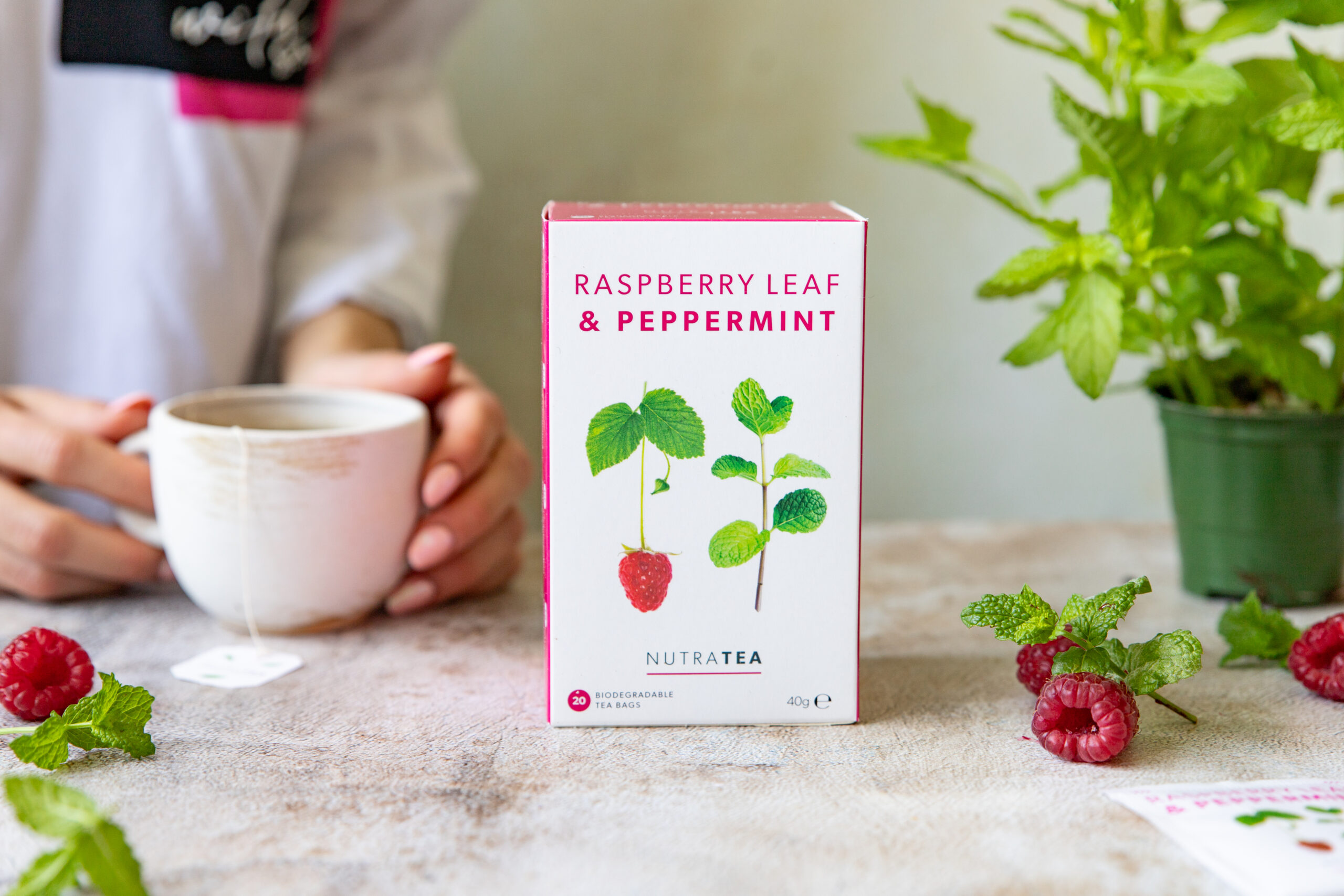
NutraTea’s Raspberry Leaf & Peppermint Tea combines 70% raspberry leaf with 30% peppermint.
It’s a simple pairing with an interesting contrast. Raspberry leaf provides the earthy, slightly astringent base, while peppermint brings a distinctive fresh, cooling character. Peppermint also has its own long history of traditional use in relation to digestive wellbeing.
The result is a naturally caffeine-free infusion that retains raspberry leaf as the dominant ingredient while giving it a fresher flavour profile.
For those exploring raspberry leaf specifically, this is NutraTea’s primary raspberry leaf blend.

Raspberry leaf through different stages of women’s lives
Pregnancy may be raspberry leaf’s most familiar association, but it isn’t the only place you’ll encounter it.
Raspberry leaf also features in NutraMother, where it’s included alongside botanicals such as fenugreek and fennel in a blend developed around motherhood and postnatal wellbeing.
You’ll find it again in NutraMeno, a blend created for women navigating perimenopause and menopause.
That doesn’t mean raspberry leaf has the same purpose in every blend. Rather, it reflects something interesting about traditional herbalism: the same botanical can have a history spanning different stages of life and be combined with different herbs depending on the purpose and character of the formulation.
It’s one reason raspberry leaf deserves to be understood as more than simply “pregnancy tea”.
How do you drink raspberry leaf tea?
Modern raspberry leaf tea doesn’t require any complicated preparation.
It can be brewed much like other herbal teas, using hot water and allowing enough time for the leaves to infuse. The exact brewing instructions will depend on the product you’re using.
Its naturally caffeine-free nature means it can be enjoyed at different points throughout the day. Some people like it after a meal, while others use it as an alternative to their usual caffeinated afternoon or evening drink.
If the earthy flavour of pure raspberry leaf isn’t for you, a blend containing peppermint can provide a fresher introduction to the herb.
And despite the name, adding fresh raspberries won’t make it more authentic. The leaf, not the fruit, is the important part of raspberry leaf tea.
What does the research tell us about raspberry leaf?
Raspberry leaf presents an interesting contrast between a very long history of traditional use and a relatively small modern evidence base.
Scientific research has examined its composition and explored its traditional association with pregnancy, but the available human studies remain limited. That means there’s still a gap between raspberry leaf’s considerable reputation and what researchers can confidently demonstrate in clinical settings.
This doesn’t make its history irrelevant. Traditional knowledge can help identify plants worthy of further investigation. But it does mean claims about raspberry leaf should be kept proportionate to the evidence.
For tea drinkers, the most established facts are much simpler: raspberry leaf is a naturally caffeine-free botanical with a distinctive composition, an extensive history of traditional use and a particularly strong connection with women’s herbal traditions.
A traditional leaf finding a new audience
Raspberry leaf is a good example of how an old herbal tradition can suddenly feel very modern.
People discovering it today may arrive through pregnancy discussions, women’s wellness content or simply a desire to explore naturally caffeine-free drinks. Behind those modern searches, however, is a plant that people have been harvesting and brewing for generations.
From its distinctive tannins and flavonoids to its traditional associations with women’s wellbeing and pregnancy, there’s far more to raspberry leaf than the fruit growing beside it might suggest.
Whether you discover it through Raspberry Leaf & Peppermint, encounter it in NutraMother or find it among the botanicals in NutraMeno, understanding the history and evidence behind raspberry leaf makes that everyday cup considerably more interesting.
Frequently Asked Questions
What is raspberry leaf tea?
Raspberry leaf tea is a naturally caffeine-free herbal infusion made from the dried leaves of the red raspberry plant (Rubus idaeus). Unlike raspberry fruit tea, it has a mild, earthy flavour rather than a sweet raspberry taste.
What is raspberry leaf tea used for?
Raspberry leaf has traditionally been associated with women’s wellbeing, particularly during the later stages of pregnancy. It has also appeared historically in herbal preparations associated with digestive wellbeing and is enjoyed today as a naturally caffeine-free drink.
What are the benefits of raspberry leaf tea?
Potential raspberry leaf tea benefits include providing a naturally caffeine-free drink and naturally occurring plant compounds such as tannins and flavonoids. It also has a long history of traditional use in women’s herbal practices, although research into many specific health benefits remains limited.
Does raspberry leaf tea taste like raspberries?
No. Raspberry leaf tea is made from the leaves rather than the fruit, so its flavour is generally earthy, herbal and slightly astringent rather than fruity or sweet.
Is raspberry leaf tea the same as raspberry tea?
Not necessarily. Raspberry tea may refer to a fruit-flavoured infusion, whereas raspberry leaf tea specifically contains leaves from the red raspberry plant.
Why do people drink raspberry leaf tea during pregnancy?
Raspberry leaf has traditionally been consumed during the later stages of pregnancy in association with preparation for childbirth. However, evidence for specific pregnancy benefits remains limited, and anyone considering it during pregnancy should seek individual advice from their midwife or healthcare professional.
Does raspberry leaf tea contain caffeine?
No. Pure raspberry leaf is naturally caffeine free.